The twins’ enduring trauma and guilt
The God of Small ThingsThe twins’ enduring trauma and guilt shapes Rahel and Estha’s adult lives as a shared burden that cannot be resolved by assigning blame or claiming innocence. They understand that several people participated in the events that led to Velutha’s death, yet they remain caught in a painful uncertainty about their own part in what happened. The grief they carry belongs partly to someone else, but it has become inseparable from their lives.
A grief without a settled role
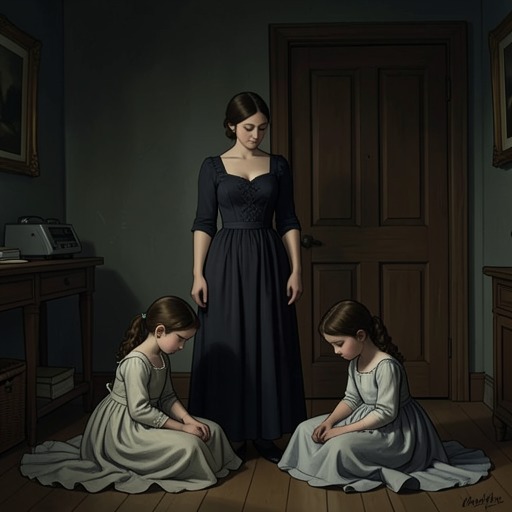
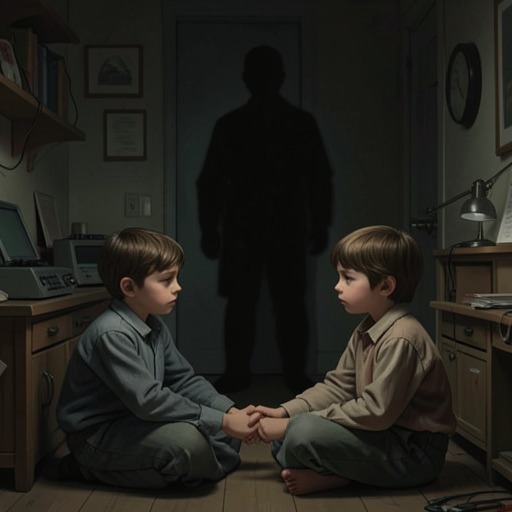
The twins are figured as actors trapped in an obscure play, stumbling through parts whose plot they cannot grasp and tending someone else’s sorrow. The theatrical image makes their predicament more than a remembered episode: they seem unable to step outside the roles imposed by the past. Their continued performance has no clear narrative that would explain how to move on, and their grief is at once intimate and displaced.
The possibility of calling themselves victims is presented as a crossing they cannot make. Such a recognition might have given their suffering a face, allowed them to feel anger, seek redress, and eventually try to exorcise the memories. But the text does not grant them that route to relief. Their trauma persists in part because the distinction between being harmed and being implicated remains difficult for them to inhabit.
Shared responsibility and the absent victim
The twins know that they were not the only perpetrators that day. That recognition prevents the past from being reduced to a simple account in which blame belongs wholly elsewhere; it also does not erase the fact that there was only one victim, Velutha. The contrast between several perpetrators and a single victim concentrates their guilt around the person who suffered and died, without making the twins’ understanding of their own responsibility any less troubled.
The narration identifies Velutha through the distinctive details of his blood-red nails and the brown leaf on his back, joining the memory of the victim to imagery that reaches beyond the immediate human tragedy. Yet the central fact remains sharply unequal: the twins’ burden is shared, while the loss at its center belongs to one person. Their awareness of multiple perpetrators therefore offers neither a clean division of guilt nor a way to make the victim’s fate disappear.
The burden that cannot be put down
The twins’ guilt is described as an unnamed thing held in their hands, like an imaginary orange. It cannot simply be handed away; there is nowhere to lay it down, and anger is unavailable as a means of directing it outward. The image turns an abstract psychological state into a persistent obligation: they must keep carrying what cannot be resolved by explanation alone.
That burden is linked to a larger rupture. Velutha’s death leaves a hole in the universe through which darkness pours, and their mother follows through it without turning to say goodbye. The twins are left spinning without moorings, in a place with no foundation. Their trauma thus gathers together bereavement, separation, and guilt: the loss of Velutha, their mother’s departure, and the knowledge that the events involved more than one perpetrator.
Narrative form and aftermath
The passage presents the twins’ suffering through images of performance, an impossible crossing, an object that cannot be set down, and a hole that admits darkness. These images give form to what remains unresolved rather than offering a diagnosis or a path to recovery. The apparent possibility of naming themselves victims is raised only to show why that identification does not become an exorcism: recognition alone cannot undo their memories or undo what happened.
After hours have passed, the moon rises and the garden reappears, with Rahel still sitting in it. This return of the visible world does not repair the human losses or release the burden she shares with Estha; it marks a shift in the scene rather than a resolution of the trauma. The breeze brings the sound of drums, a gift and a promise of a story. Storytelling offers a form in which the past can be approached, but the twins’ grief remains something they must hold, carefully and forever.